The care label knows more about your shirt than a general laundry rule does.
Many dress shirts can be machine-washed. Some cannot. Start with the label on the garment you own, especially if it has unusual trims, contrast fabrics or a different construction from your everyday shirts.
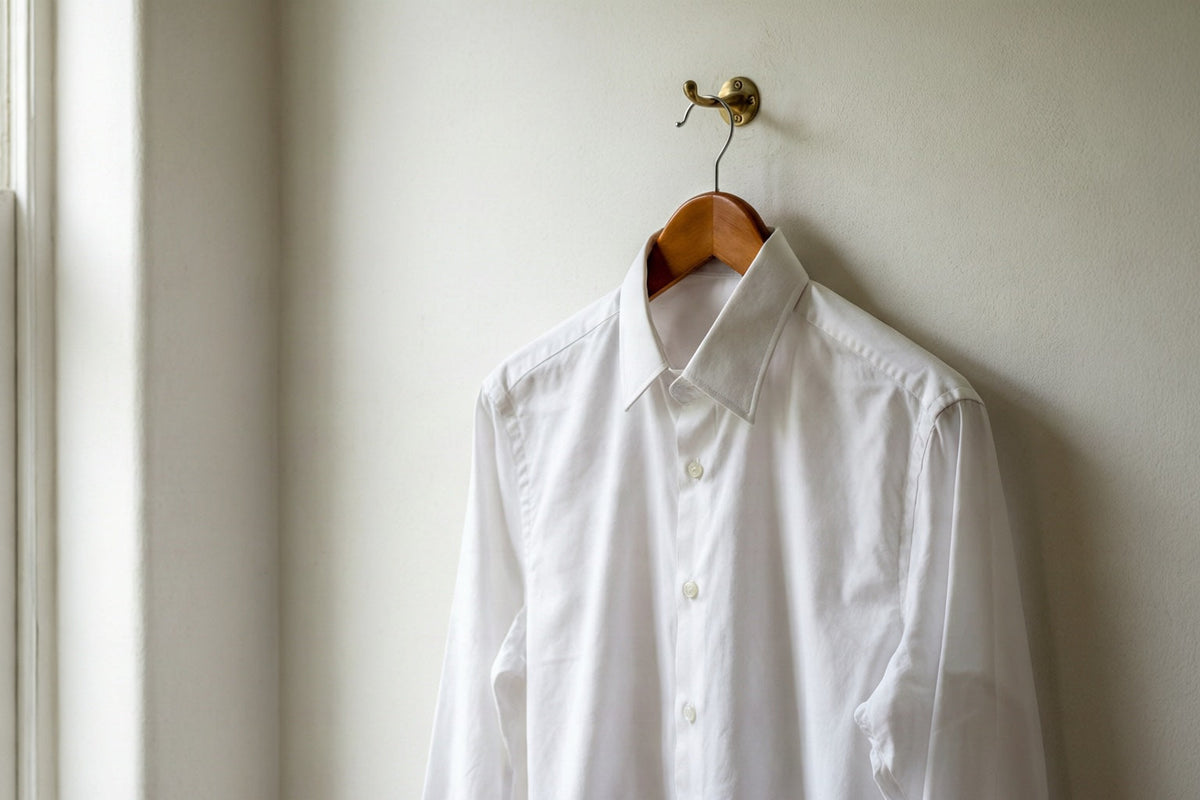
The current Flex Tailor white stretch dress shirt is listed as 85% polyester and 15% spandex, with these care instructions: machine wash warm, do not bleach, do not tumble dry, warm iron. The guidance below explains how to build a routine around those instructions.
Before the wash
Empty the pockets, check the collar and cuffs, and remove removable collar stays. Separate light and dark colours and avoid mixing a fine shirt with rough items or exposed fasteners that might snag it.
For a mark or stain, follow the garment and cleaning-product instructions. Test any treatment on an inconspicuous area first. Do not assume that a stronger chemical or hotter wash is the answer.
Give the shirt room in the machine. The right load size depends on your washer and the other items in it; a fixed number of shirts is not a useful rule for every machine.
The wash
Use the temperature and cycle permitted by the care label. For the white Flex Tailor stretch shirt, choose warm rather than hot. Washing-machine settings vary, so check the machine's guidance if you need an exact temperature.
Use a suitable laundry detergent in the amount recommended for the load. Do not add bleach when the garment label says not to. Check before adding other laundry treatments rather than treating them as essential.
Machine-washable does not mean every setting is suitable. A label's temperature and drying instructions are part of the instruction, not optional extras.
The dry
The Flex Tailor white stretch shirt's instruction is clear: do not tumble dry. Follow any additional drying guidance on your garment's label.
Remove the shirt promptly after washing, smooth the collar and cuffs gently, and let it air-dry in a suitable place. Avoid stretching the fabric while it is wet. If hanging is appropriate for your shirt, use a clean hanger that supports it without distorting the shoulders.
Air-drying can help reduce creasing, but it does not guarantee that a shirt will need no ironing.
The press
If the label allows a warm iron, start there rather than turning the heat up to save time. Check the iron's instructions for the fabric, and keep it moving. Test a small, hidden area if you are uncertain.
A useful order is collar, cuffs, sleeves, then the body. Work around buttons instead of pressing directly onto them, and avoid leaving the iron resting on one spot.
Steam is not a substitute for washing a dirty shirt. Use a steamer only when the garment's care instructions permit it.
Between wears
Let the shirt air before putting it away. Wash according to how it has been worn: heat, perspiration, marks and odour matter more than a fixed count of wears.
Hang or fold it once it is clean and dry. A little space in the wardrobe helps keep freshly pressed shirts from getting crushed.
What about suits and knit blazers?
Use a separate routine. Stretch fabric does not mean that a tailored jacket is machine washable. Its lining, interlinings and construction also affect how it should be cleaned.
Follow the jacket's label and use professional dry cleaning when specified. Between cleanings, hang it on a supportive hanger and let it air. Ask a professional about stains or pressing rather than experimenting with a wash cycle.
Explore the stretch dress shirts and blazers for product-specific care information. If your label is unclear, send us the product name and your care question before you clean it.


